Still Friends With People Who Are Still Using? Here's How to Navigate That Without Losing Yourself
The standard recovery advice sounds clean and simple: distance yourself from anyone connected to your using. Change your people, places, and things. Build a new life. And honestly? There's real wisdom in that framework — especially early on, when your nervous system is still raw and your recovery footing isn't stable yet.
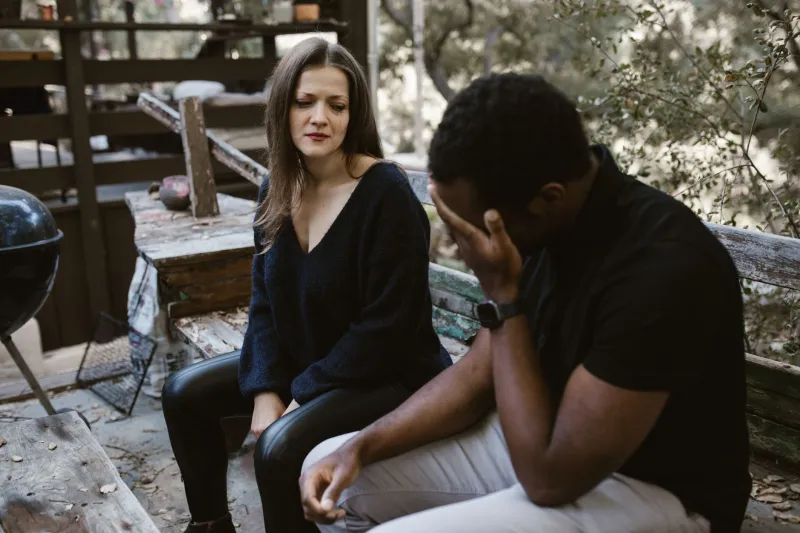
But life isn't clean or simple, and for a lot of people in recovery, some of the most complicated emotional terrain isn't about cravings or triggers. It's about the people still out there, still struggling, who used to be your people. Maybe they're childhood friends. Maybe they're siblings. Maybe they're the person you went through everything with, and cutting them off feels less like self-protection and more like abandonment.
This piece isn't going to tell you what to do. It's going to help you think more clearly about a situation that deserves more nuance than most recovery resources give it.
The Guilt You're Not Imagining
First — the guilt is real, and it makes complete sense.
When you get sober and the people around you don't, there's often a complicated emotional residue that nobody quite prepares you for. You got out. They didn't. And depending on how enmeshed your using lives were, that can carry a weight that looks a lot like survivor's guilt.
You might catch yourself wondering whether your recovery is somehow a betrayal. Whether you're doing better at their expense. Whether you could do something, say something, be something that would help them get where you are.
Here's what's worth understanding about that guilt: it's not a signal that you've done something wrong. It's a signal that you care. The problem is that guilt, if you're not careful, can become a decision-making engine — and guilt is a terrible navigator. Acting from guilt instead of clarity is one of the more reliable ways to end up in situations that hurt both of you.
The Difference Between Compassion and Enabling
This distinction is genuinely important and genuinely hard to hold onto in real-time situations.
Compassion means caring about someone's wellbeing, being emotionally present for them, and holding space for the reality of what they're going through — without taking responsibility for their choices or outcomes.
Enabling means taking actions — often with the best intentions — that reduce the natural consequences of someone's substance use in ways that make it easier for them to continue using. Lending money you know will go toward drugs. Covering for them with family or employers. Letting them stay at your place when doing so means you're exposed to active use. Providing emotional support in the middle of their active crisis at the cost of your own stability.
The uncomfortable truth is that you can love someone deeply and still enable them. And enabling, despite feeling like love, often delays the kind of bottom that creates genuine motivation to change.
You're not responsible for someone else's addiction. You're also not obligated to participate in it.
When Staying Connected Is Genuinely Risky
There's a version of this conversation that's about managing emotional complexity, and then there's a version that's about actual safety — and those are different conversations.
If someone from your using days exposes you to substances, to environments where use is happening, to people who are actively dealing, or if contact with them consistently destabilizes your own recovery — that's not a boundaries conversation. That's a separation conversation, at least for now.
Early recovery especially — roughly the first year, though this varies significantly from person to person — is a period when your brain is still in active neurobiological repair and your coping mechanisms aren't fully established. Exposing yourself to high-risk relational environments during that window is a different calculation than it might be later.
This isn't about caring less. It's about recognizing that you cannot help anyone from inside a relapse. Your sobriety is the foundation. Without it, you have nothing to offer.
Compassion Fatigue Is a Real Thing
Even when direct safety risks aren't the issue, sustained emotional proximity to someone in active addiction is genuinely taxing. Watching someone you care about make choices that are hurting them — and being largely powerless to change that — takes a toll that accumulates quietly.
Compassion fatigue is a recognized psychological phenomenon, originally documented in caregivers and healthcare workers, but absolutely applicable here. The symptoms include emotional exhaustion, a sense of hopelessness about the other person's situation, irritability, and a gradual erosion of your own wellbeing. It can sneak up on you, especially if you're someone who's wired toward caretaking.
Checking in with yourself regularly about how these relationships are affecting you isn't selfish. It's necessary maintenance. Some questions worth sitting with: Do I feel worse after most interactions with this person? Am I spending significant mental energy managing their crisis rather than my own recovery? Have I started hiding the relationship from my support network?
If the answers are yes, it's worth talking to a therapist or counselor about what you're carrying.
What Healthy Contact Can Actually Look Like
For some people, some of the time, contact with people still using is possible without it becoming destabilizing. Here's what that tends to require:
Clear internal boundaries, not just spoken ones. Knowing in advance what you will and won't do — not loaning money, not showing up to certain places, not answering crisis calls at 2am when you have work the next day — before you're in the situation means you're not making those decisions under emotional pressure.
A support system that knows about the relationship. If you're maintaining contact with someone in active addiction and you're not talking about it with your therapist, sponsor, or recovery support network — ask yourself why. Secrecy in recovery is usually a warning sign worth examining.
Honest conversations with the person. You don't have to pretend your recovery doesn't exist or that you don't have concerns. You also don't need to lecture them or make every conversation about their using. But being real about where you are and what you're able to offer is kinder than performing a version of the friendship that isn't sustainable.
Accepting what you cannot control. This one is hard and it never fully gets easy. You cannot want someone's recovery more than they want it for themselves. You cannot love them into sobriety. The only person's recovery you have any real influence over is yours.
There's No Perfect Answer Here
Some of these relationships will evolve in ways you can't predict. Some people will find their way into recovery and the friendship will take on new depth. Some won't, and you'll eventually reach a point where the connection has to change for your own sake — and that grief is real, and it deserves to be honored.
What we're pushing back on is the idea that this is simple. That there's a clean rule that applies to every friendship, every level of history, every degree of risk. There isn't.
What there is: your own clarity about what you need, honest assessment of what's actually happening in these relationships, and the willingness to keep putting your recovery first — not because it's selfish, but because it's the only way any of this works.